

The Most Beautiful Beaches of the Costa Smeralda – From Olbia to Palau
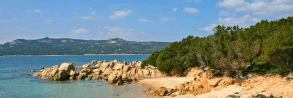
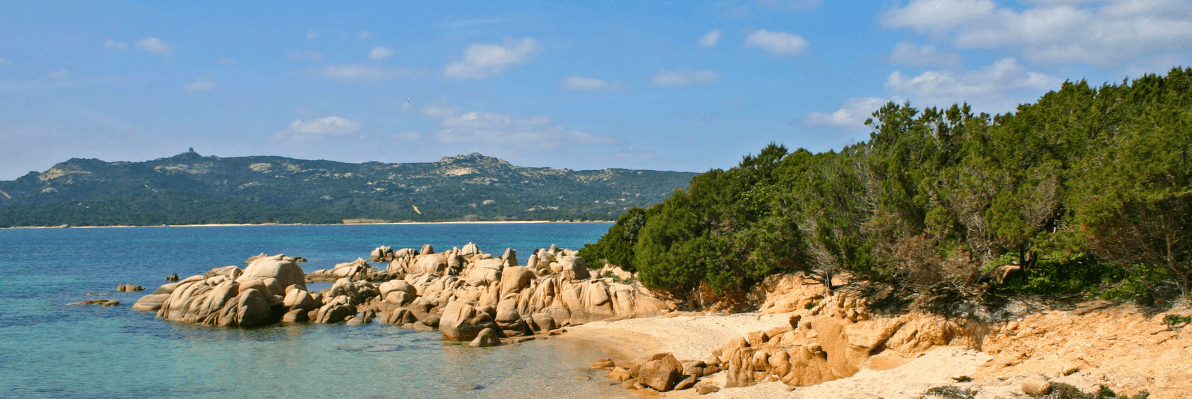
The Costa Smeralda and the surrounding coastline in north-east Sardinia are home to some of the island’s most beautiful beaches. From Olbia through Porto Rotondo and Porto Cervo to Palau, long sandy beaches alternate with small coves framed by granite rocks. The water shifts from turquoise to emerald green with the seabed and the angle of the sun.
At many beaches, the water deepens gradually, making them a good choice for a day out with children. Other coves are tucked between Mediterranean scrub, broom and pine trees. Summer brings plenty of visitors, but much of the coastline remains largely undeveloped.
Here are our beach recommendations for the Costa Smeralda and the surrounding area, heading from south to north along the coast between Olbia and Palau.
Still the Costa Smeralda or further afield?
Strictly speaking, the Costa Smeralda covers only the stretch of coast between Rena Bianca and Poltu Quatu. Our beach recommendations extend beyond this area to include the most beautiful coves between Olbia and Palau.
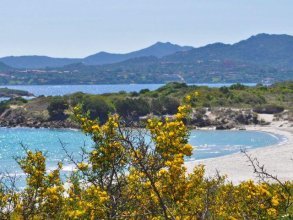
Rena Bianca – white sands at the gateway to the Costa Smeralda
Approaching from Olbia, Spiaggia di Rena Bianca lies at the gateway to the Costa Smeralda. Its name means ‘white beach’, a fitting description of the almost snow-white sand. Depending on the sunlight, the sea ranges from emerald green to pale blue. You can already see the water shimmering between the granite rocks from the car park.
Behind the beach, Mediterranean scrub and broom bushes grow among low granite formations. A footpath of around 300 metres leads through the vegetation from the large car park to the sea. Parasols and sun loungers are available to hire during the summer season.
Rena Bianca is particularly popular with visitors staying in Marina di Portisco and San Pantaleo, partly because of its easy access. The bay has largely retained its natural character and makes a lovely first beach stop on the Emerald Coast.


Cala Razza di Giunco (also Junco) – small coves among granite rocks
Cala Razza di Juncu, also known as Razza di Giunco, is tucked away on the Costa Smeralda. Tall reeds grow behind the beach, while pale sand with occasional pebbles, shallow water and granite rocks line the shore. The rocks at the edge of the bay are well worth exploring with a snorkel.
Spiaggia Razza di Junco is one of the area’s lesser-known beaches and is popular with locals too. Its clear water and relatively peaceful setting offer an alternative to the better-known coves. It is also a good choice for visitors travelling with dogs, with one of the loveliest dog beaches in Sardinia.
Spiaggia Razza di Junco is one of the area’s lesser-known beaches and is popular with locals too. Its clear water and relatively peaceful setting offer an alternative to the better-known coves. It is also a good choice for visitors travelling with dogs, with one of the loveliest dog beaches in Sardinia.


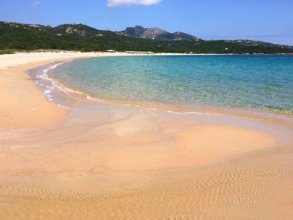
Liscia Ruja – the ‘Long Beach’ of the Costa Smeralda
At around 500 metres long, Spiaggia di Liscia Ruja is the largest beach on the Costa Smeralda. It lies in the southern part of Cala di Volpe bay, opposite the Romazzino peninsula, which offers some shelter depending on the wind direction. The pale sand takes on golden and pink hues, with occasional reddish granite grains typical of Gallura.
Broom bushes and Mediterranean scrub grow behind the beach. Out to sea, the islands of Mortorio and Soffi rise beyond the blue water. The sea deepens gradually, making the beach popular with families too.
Liscia Ruja attracts swimmers, sailors and sunbathers. It gets busy in high season, so visit outside the peak summer months for a quieter experience.



Spiaggia del Principe – the granite cove of Poltu di li Cogghj
Spiaggia del Principe is one of Sardinia’s best-known beaches. A short walk from the car park takes you through fragrant Mediterranean scrub down to the bay.
Known locally as Poltu di li Cogghj, the bay has two stretches of sand divided by a large granite rock. The sand is pale and fine, and the water shimmers in shades of blue and turquoise. Reddish granite boulders frame the beach.
The name ‘Prince’s Beach’ refers to Aga Khan, who initiated the development of the Costa Smeralda. It is said to have been his favourite bay. Today, it is among the most famous beaches around Porto Cervo.
It gets busy in high season. During the winter months, washed-up Posidonia seagrass often covers parts of the shore. These dead leaves help protect the sand from erosion and form part of the natural coastal ecosystem.


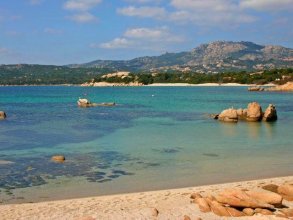
Capriccioli – popular beach coves on the Costa Smeralda
Cala Razza di Juncu beach, also called Razza di Giunco, is a snow-white beach paradise on the Costa Smeralda a>, which is framed by tall reeds. Great, shallow, crystal clear waters and perhaps the most beautiful dog beach in Sardinia. Snorkel enthusiasts will also get their money's worth in the rock paradise at the edge of the beach!


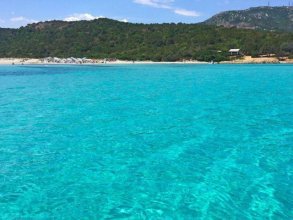
Grande Pevero – a picture-postcard bay near Porto Cervo
Grande Pevero is one of the classic picture-postcard views of the Costa Smeralda. The crescent-shaped bay opens onto the Gulf of Pevero, with clear, turquoise water.
In summer, numerous sailing boats and yachts anchor offshore. Most beachgoers gather at the western end. The eastern section, between broom bushes and low dunes, often offers a quieter spot.
Behind the beach lies La Patima lagoon, with the Pevero Golf Club further inland. The red granite rocks at either side of the bay are popular with snorkellers.
Baia Sardinia (Spiaggia di Cala Battistoni) – a popular family beach on the Gulf of Arzachena
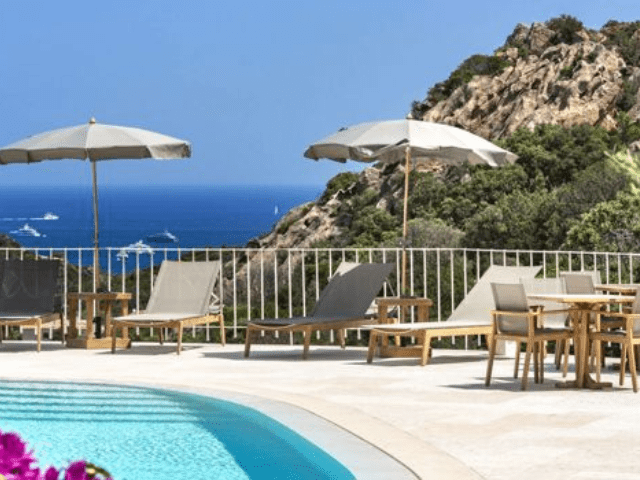
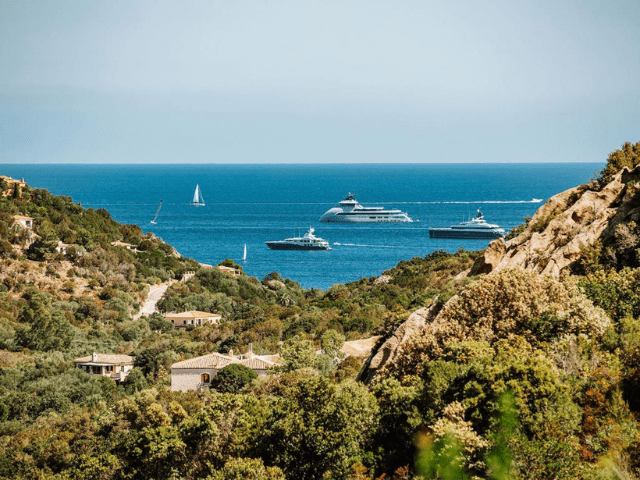
At the north-eastern end of the Gulf of Arzachena lies Baia Sardinia, one of the area’s most popular seaside destinations. The pale beach in the bay originally known as Cala Battistoni is fairly short, with fine, soft sand.
The sea is clear and turquoise, with rounded granite rocks scattered along the beach. Pine trees and Mediterranean scrub surround the bay, backed by numerous holiday properties. The water deepens gradually, making the beach particularly popular with families with children. Bars, restaurants and parking are available nearby in summer.
The sea is clear and turquoise, with rounded granite rocks scattered along the beach. Pine trees and Mediterranean scrub surround the bay, backed by numerous holiday properties. The water deepens gradually, making the beach particularly popular with families with children. Bars, restaurants and parking are available nearby in summer.


Tanca Manna & Mannena (Barca Bruciata) – coarse-sand beaches near Cannigione
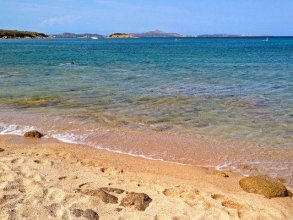
North of Cannigione lies the approximately 300-metre-long bay of Tanca Manna. The beach consists of coarse granite sand, with clear, deep-blue water.
Several small beach bars and sun loungers make for a relaxed day by the sea. The bay is considered a good swimming spot in windy weather, although the water gets deep quite quickly, so keep a close eye on children.
Further north, small coves lie between pink-tinged granite rocks, mastic bushes and rockroses. Outside high season, you can often find a quiet spot for a picnic overlooking the sea.
The beach of Mannena, also known as Barca Bruciata, is the largest beach on the Gulf of Arzachena. Its coarse, pale sand and gently shelving water make it particularly popular with families.
Many visitors staying in Palau come here when the mistral blows too strongly on the beaches further north. Windsurfers, meanwhile, appreciate the offshore winds out at sea.
The nickname ‘Barca Bruciata’ – ‘burnt boat’ is said to stem from a dispute between a farmer from Cannigione and a Tuscan charcoal burner who shipped timber from the surrounding forests. According to the local story, the farmer set fire to his ship while it lay at anchor off this bay.
Palau Vecchio – Palau’s town beach
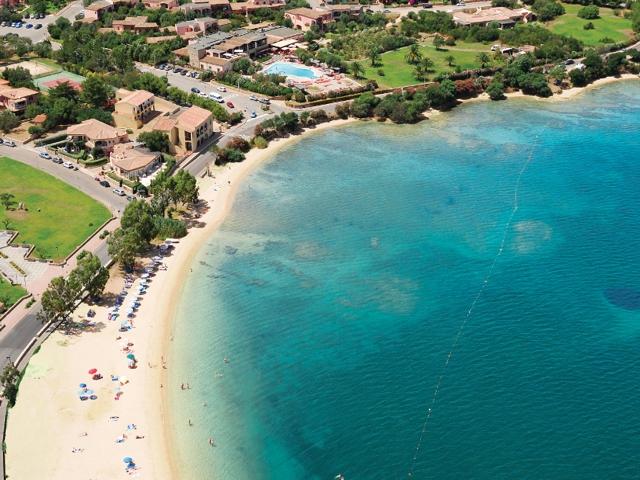
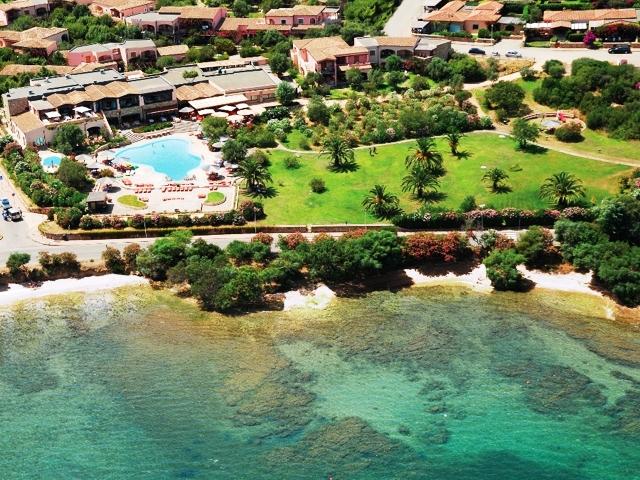
Cala Razza di Juncu beach, also called Razza di Giunco, is a snow-white beach paradise on the Costa Smeralda a>, which is framed by tall reeds. Great, shallow, crystal clear waters and perhaps the most beautiful dog beach in Sardinia. Snorkel enthusiasts will also get their money's worth in the rock paradise at the edge of the beach!


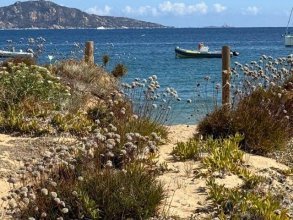
Porto Pollo (Porto Puddu) – a surfing hotspot in northern Sardinia
The long, pale sandy beach of Porto Pollo, also known as Porto Puddu, is one of Sardinia’s best-known surfing spots. Windsurfers and kitesurfers come here from across Europe.
The large bay offers flat-water areas and reliable wind conditions. Facilities include surf and kite schools, bars and a campsite.
All this means it can get busy, with experts and beginners sharing the waves. If you are stepping onto a board for the first time, bear in mind that the bay can be popular even outside high season.





Plan your Costa Smeralda holiday with me!
Which accommodation suits my holiday budget? Just ask us. We’ll help you find the right place to stay in Sardinia.
Jana
Sardinia4all
Jana
Sardinia4all